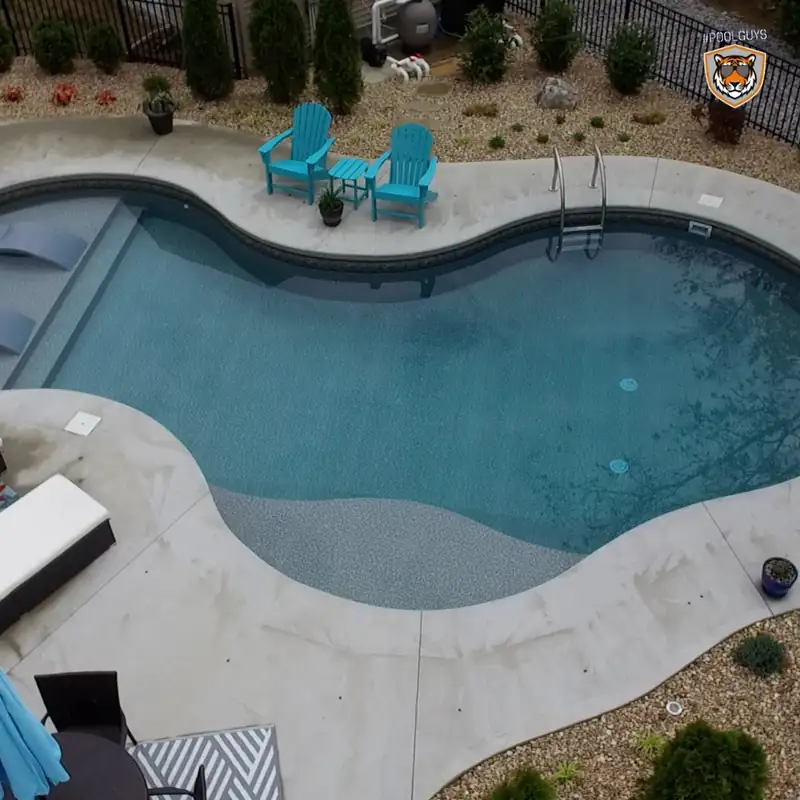
The spring opening, in the order it should run
The line on our services page is a smooth, carefree pool opening in the spring, and the word that matters is smooth. A typical opening runs in a fixed order so nothing gets started on top of a problem: the cover comes off, the water comes up to its working level, the equipment is started, and only then is the water balanced.
Cover first, because everything under it has been sitting since fall. Water second, because a pump run without enough water at the skimmer can burn itself out in minutes. Equipment third: pump, filter and any heater are started and watched for leaks at the fittings and for air in the lines. Balance last, because chemistry set before the water is circulating is chemistry set twice.
That order is the same whether the pool is a Latham fiberglass shell, a hybrid vinyl liner or a custom gunite pool. Customers across the Lexington metro book the opening before the first warm weekend, and the Richmond office schedules them as the weather turns.
The fall closing: lines, water level, cover
Our fall service is a full-service closure, and a closing has three jobs that cannot be skipped. The lines are winterized so no water is left in them to freeze. The water is lowered as far as that particular pool type needs, which is not the same for every pool: a vinyl liner, a fiberglass shell and a gunite pool each have their own rule, and so do the skimmers and returns. Then the cover goes on and is secured.
Equipment is part of the same visit. Pumps, filters and heaters hold water in their housings, and that water has to be drained or protected as well. A closing that only handles the pool itself and leaves the plumbing pad alone is half a closing.
It also sets up the next spring. Water that is balanced and clean when the cover goes on comes out of the winter far easier to bring back than water that was left to fend for itself.
What a skipped or rushed closing costs in a Kentucky winter
Kentucky does not stay frozen. It freezes, thaws and freezes again, and that cycle is hard on anything with water trapped in it. Lines that were not properly winterized can split. Pump and filter housings can crack. Fittings loosen. None of it shows until the pool is opened in spring and water starts moving, which is the worst possible time to find out.
A cover that is rushed on, or left slack, tends to collect debris and standing water through the cold months, and what is under it turns green well before swimming season. A pool lowered too far, or not far enough for its type, can stress the shell or the liner.
The fix for most of this is a few hours at the right time. If your pool has already gone a winter without a proper closing, the next steps are an opening that inspects first and a look at repairs before anything is switched on.