What a typical visit covers
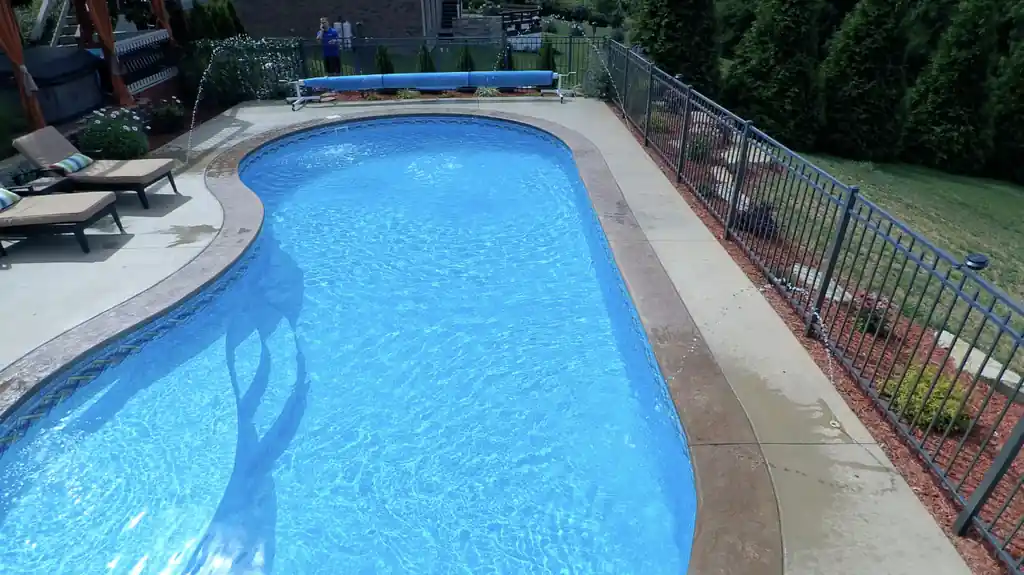
A weekly visit is a short list done every time, because a pool that gets the short list every week rarely needs the long one. A typical visit means testing and balancing the water, skimming the surface, brushing the walls and steps, emptying the skimmer and pump baskets, and checking the filter and its pressure.
The order matters less than the habit. Balance keeps algae from getting a start, brushing keeps it from holding on, baskets keep the pump from starving, and the filter check catches a clogged cartridge or tired sand before the water tells you about it.
What a visit includes depends on the pool and the plan you set up with the office, so ask when you call. The ground rules are the same for a Latham fiberglass pool, a vinyl liner pool or gunite, with the details shifting by surface and equipment.
Swim-ready, not just clean
Our promise on the services page is plain: we'll keep it swim-ready year-round. In swimming season that means a pool you can jump into without a chore list first. Across the year it means the cover goes on right in the fall and comes off to water that is ready to bring back in the spring.
Heat and rain move chemistry faster than most owners expect. A hot week in a Richmond July burns off chlorine, a storm dilutes the balance, and a full weekend of swimmers uses up what was left. Weekly service gets ahead of those swings.
It is also the service that makes the rest cheaper. Equipment that is watched weekly gets caught early, and water that stays in range does not need the rescue treatments that cost the most.
When to call between visits
Do not wait for the next visit if the water turns cloudy or green, if the level drops faster than evaporation would explain, or if the pump gets loud, loses prime or trips a breaker. A heater that shows a fault, or a filter pressure that has jumped, belongs in the same pile.
After a hard storm or a big party, a quick call is cheaper than a recovery. You can also bring a water sample to the front office in Richmond, Monday to Friday, 10am to 5pm, and walk out with the results.
If something needs more than a maintenance visit, it moves over to repairs, and the person who found it can tell you what they saw.