Closing a Pool Before a Kentucky Winter
A good closing protects the plumbing, the equipment and the cover, so your spring opening is a routine job instead of a repair list.
October 20, 2026 · 4 min read
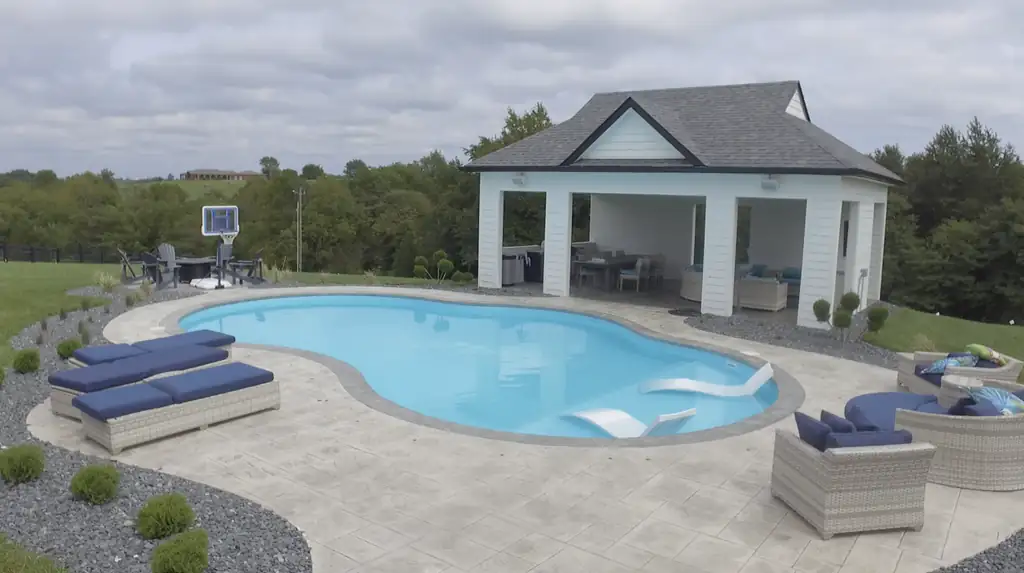
Closing a pool feels like the end of the fun, so people put it off. Then a cold snap arrives, the leaves fall all at once, and a job that should have taken an afternoon turns into a mess. Central Kentucky winters aren't Minnesota winters, but they freeze hard enough, and often enough, to crack plumbing that was left holding water. Here's how closing works and why it's worth doing right.
Why does closing matter so much in Kentucky?
Water expands when it freezes, and nothing in a pool's plumbing is built to give way for it. Pipes, the pump housing, the filter, the heater and the lines to the skimmer and returns can all hold water after the pool is shut down. One hard night can split a fitting, and you won't know until you start the system in spring.
Kentucky makes it trickier because the weather won't commit. A week of mild days can lull you into leaving things alone, and then a polar night shows up. Freeze, thaw, freeze again is rough on equipment that was only half prepared. The safest plan is a closing done completely, on a good day, ahead of the hard cold.
When should you close the pool?
The rule of thumb is to close once the water stays cool, around the mid-60s Fahrenheit and below. Below that, algae slows down and closing chemicals do their job well. Close too early while the water is still warm and you give algae a head start under the cover. Close too late and you're pulling leaves out of a cold pool in the rain, with a freeze on the way.
Leaves matter more than the calendar. If you have trees nearby, a fall closing often means chasing leaves for weeks. Skimming daily and running the filter well before closing makes the job much cleaner. Book your closing before the trees finish dropping, not after.
What does a full closing include?
A full service closing starts with the water, not the cover. The pool is cleaned, brushed and vacuumed. The chemistry is balanced so the water doesn't etch the surface or stain it over the winter, and winter chemicals are added to keep algae in check. Skipping this part is how people open to a swamp even though the cover stayed on all season.
Next comes the plumbing. The water level is lowered to the right point for your pool and cover. Lines are blown out with a high-volume blower so they're clear of water, then plugged. Where air can't clear a line, antifreeze goes in. The pump, filter and heater are drained and disconnected as needed, and the loose parts are stored. Ladders, rails and baskets come out too.
- Clean, brush and vacuum the pool.
- Balance the water and add winter chemicals.
- Lower the water to the right level for your cover.
- Blow out the lines and plug them, using antifreeze where needed.
- Drain the pump, filter and heater, then store loose parts.
- Install the cover and secure it properly.
The cover is the last step and the one people trust too much. It needs to be properly seated and anchored, and the manufacturer's guidance should drive how it's secured and how much water stays in the pool. American Pool & Spa shows Mizu and Coverstar among its brands, so if you're replacing a worn-out cover, ask about options when you book.
Mistakes that cost a spring repair
The biggest one is draining the pool. It sounds logical, since less water means less to freeze. But in the ground, an empty pool can be pushed up by groundwater. A fiberglass shell can float out of position, a vinyl liner can shrink and wrinkle without water behind it, and a gunite shell can crack. Lower the level as directed and leave the rest alone.
The second is skipping the plumbing. A cover with perfect water underneath does nothing for a pipe full of water. The third is closing with unbalanced water, or no winter treatment, and hoping the cover handles the rest. The fourth is leaving equipment hooked up with water inside. Each one is a small shortcut that often turns into a spring bill.
- Draining the pool instead of lowering the level.
- Blowing out only some of the lines.
- Closing with high pH, low sanitizer or heavy debris.
- Leaving water in the pump, filter or heater.
- Using a cover that is torn, loose or poorly anchored.
Do it yourself, or hire it out?
Doing your own closing is a real option if you have the blower, the plugs, the antifreeze and the confidence in your plumbing layout. Many owners start with a simple setup and do well. Many others discover in March what they missed in October.
One new pool owner wrote that American Pool & Spa built their pool, then closed it for them in the fall, and they plan to have the company open it in spring too. If you'd rather have a full-service closing, it's one of the standard jobs the service team does each year.
Details are on /services/opening-closing, or call American Pool & Spa at (859) 623-0124. The office is at 265 N Keeneland Dr, Suite 1, Richmond, open Monday through Friday, 10am to 5pm. Call early in the fall, before the leaves and the cold show up together.
American Pool & Spa, 859.623.0124
Call 859.623.0124More articles
Fiberglass, Vinyl Liner or Gunite: Choosing a Pool Shell for a Central Kentucky Yard
Each pool shell has real strengths and real costs of ownership, and the right one depends more on your yard than on a brochure.
What a Spring Pool Opening Involves, and When to Book It
An opening is more than pulling the cover, and getting the timing right keeps a green pool from becoming your first project of summer.