Cool-Deck, Stamped Concrete or Pavers Around the Pool
The deck is where your family actually spends time, so the surface deserves as much thought as the pool itself.
October 20, 2026 · 4 min read
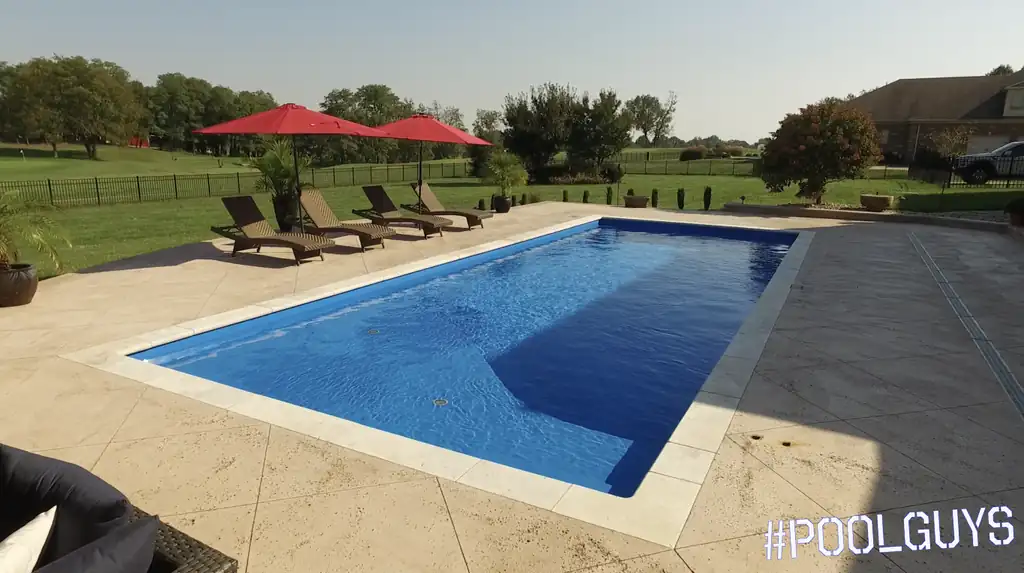
People spend months picking the pool, then give the deck about ten minutes. That's backwards. The deck is where you stand, dry off, set the chairs and chase kids who forgot the no-running rule. It takes the sun, the splash, the Kentucky freeze and a lot of wet feet. Here's how the main surfaces compare, so you can match one to the way you really use your yard.
What does a pool deck have to do?
A good one does several jobs at once. It has to give grip when wet. It should stay comfortable for bare feet in July. It needs to drain water away from the pool and the house, and it has to survive freeze-thaw cycles without turning into a puzzle of cracks. Looks matter, of course, but a deck that looks great and burns your feet isn't winning anything.
Cool-deck and broom-finish concrete
Standard concrete is the baseline, and the finish matters. A broom finish is dragged across fresh concrete to leave fine ridges, which add traction on a wet deck. It's plain, practical and easy to live with.
Cool-deck is a surface treatment made to reflect more heat than a typical slab. American Pool & Spa pours cool-deck concrete and says it stays up to 30% cooler under bare feet. That's the company's own claim for its product, and the sensible takeaway is the principle: lighter, reflective surfaces run cooler in direct sun than dark, dense ones. If your yard has no shade and you have kids who run barefoot, it's worth a close look.
- Strong points: grip, comfort underfoot, simple lines, a clean look.
- Watch for: control joints, where concrete is meant to crack neatly instead of randomly.
- Care: keep it clean, and avoid rock salt on new concrete in winter.
Stamped and decorative concrete
Stamped concrete is poured, colored and pressed with patterns that mimic stone, slate or brick. Decorative concrete is a broader family that includes color, texture and borders. You get a lot of look from one continuous slab, and you can match the style of your house.
It does need more thought. Dark colors absorb heat. Smooth patterns can get slick when wet, so the texture and any sealer should be chosen with traction in mind. Sealer wears off and has to be renewed, and the color can fade if it's neglected. A stamped deck is still concrete, which means cracks are possible, and a good installer plans joints so they fall in sensible places.
Pavers
Pavers are individual units laid over a compacted base with sand in the joints. The big advantage is repair. If a section sinks or stains, you can lift those units and reset them instead of breaking out a slab. They also give you a lot of pattern and color options, and they handle freeze-thaw movement well because the joints give a little.
The weakness is the base. A paver deck is only as good as what's under it, so base prep is where cheap jobs go wrong. Joints can grow weeds or lose sand and need topping off, and pavers around the water's edge need to be edged so they don't creep. A lake-shaped pool with a grey paver border, like one on the company's project gallery, shows how good a paver edge can look.
How do you choose?
Start with sun. A deck with no shade and a lot of barefoot traffic points to a lighter, cooler surface. A shaded or evening-use deck gives you more freedom to pick color and pattern. Then think about maintenance. Concrete wants sealing and clean joints. Pavers want occasional joint work. Neither is hands-off.
Next is the site. Slope and drainage matter more than any pattern, because water has to run away from the pool and the house. The ground underneath matters too, especially the clay common across Central Kentucky. Ask who preps the base and how drainage is handled before you compare finishes. If you want the deck to match a patio, walkway or pool house, plan them together so the colors and joints line up.
- Shade and sun: where will the deck sit in the afternoon?
- Barefoot traffic: kids, pets, barefoot guests?
- Repairs: would you rather re-seal, patch or reset units?
- Match: does it need to tie into a patio, driveway or pool house?
American Pool & Spa works with concrete in all its styles, plus pavers, cool-decking and repairs, and also builds patios, driveways, retaining walls, pool houses and fire pits. See /concrete for the details, or call (859) 623-0124. The office is at 265 N Keeneland Dr, Suite 1, Richmond, open Monday through Friday, 10am to 5pm.
American Pool & Spa, 859.623.0124
Call 859.623.0124More articles
Fiberglass, Vinyl Liner or Gunite: Choosing a Pool Shell for a Central Kentucky Yard
Each pool shell has real strengths and real costs of ownership, and the right one depends more on your yard than on a brochure.
What a Spring Pool Opening Involves, and When to Book It
An opening is more than pulling the cover, and getting the timing right keeps a green pool from becoming your first project of summer.