Pool Water Testing: What the Numbers Mean and Why to Bring a Sample In
Once you know what each number does, a water test stops being a page of jargon and becomes a short to-do list.
October 20, 2026 · 4 min read
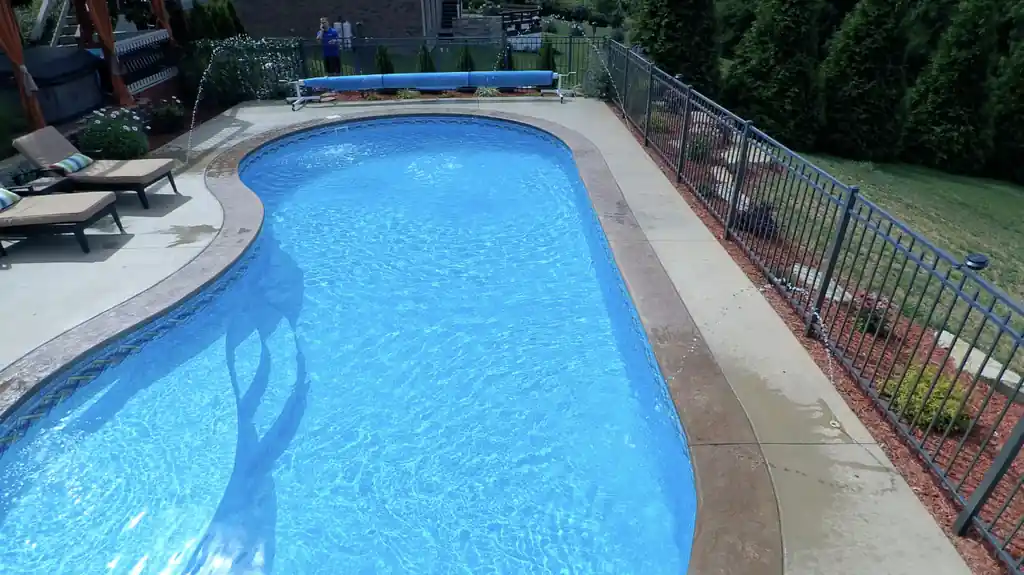
A water test printout can look like a lab report. Six or seven numbers, a few ranges, some arrows. But the idea behind it is simple: your pool water is a small chemistry set, and each number tells you what's going on with one part of it. Once you know what the numbers do, you stop guessing at the pool aisle and start adding only what the water needs.
What do the main pool numbers mean?
Start with sanitizer, which is usually chlorine. Free chlorine is the part that's still available to kill bacteria and algae. Combined chlorine is the used-up part, and it's what causes that sharp pool smell and irritated eyes. People often think a strong chlorine smell means too much chlorine. It usually means there isn't enough free chlorine to keep up.
pH measures how acidic or basic the water is. It affects comfort, how well chlorine works and how the water treats your surface and equipment. Total alkalinity acts as a buffer for pH. When alkalinity is steady, pH stays put. When it's low, pH bounces around and it feels like you're chasing it all week.
Cyanuric acid, often called stabilizer, shields chlorine from sunlight. Without any, a hot Kentucky afternoon can burn through your chlorine fast. Too much, though, and it slows the chlorine down, which is a common reason a pool goes cloudy with plenty of chlorine in it. Calcium hardness is the dissolved calcium. Too low and the water goes looking for calcium in your plaster, grout or equipment. Too high and it leaves scale.
- Free chlorine: the working sanitizer. Low means algae and bacteria get a chance.
- pH: comfort and chlorine performance. Too high and the water goes cloudy, too low and it stings.
- Total alkalinity: the buffer that keeps pH steady.
- Cyanuric acid: sunscreen for chlorine, helpful in moderation.
- Calcium hardness: protects surfaces from etching and scale.
Commonly cited ranges put free chlorine around 1 to 3 ppm, pH between 7.2 and 7.8, alkalinity around 80 to 120 ppm, stabilizer around 30 to 50 ppm, and calcium hardness around 200 to 400 ppm. Treat those as general trade guidance. Your pool's surface and sanitizer system can call for different targets, so go by what your printout recommends for your pool.
Why do the numbers move?
Weather does most of it. Heat and sun burn through chlorine. A big storm dilutes everything, drops alkalinity and calcium, and washes in organic material that chlorine has to deal with. A full weekend of swimmers adds sunscreen, sweat and oils. A cover left on too long, or a pump running short hours, lets things drift.
In Central Kentucky, the sharp swings come with summer storms and the first hot spell after a cool spring. A pool that tested perfectly on Monday can look rough by Friday. That isn't failure. It's a reason to test often and adjust a little at a time.
Why bring a sample in?
Home test strips are fine for a quick look, and they're better than nothing. They also give rough readings, they fade as they age, and colors are hard to judge in bad light. A sample that's tested properly at a pool shop gives you more careful numbers plus someone to explain them.
American Pool & Spa's front office tests water for customers. The customers who mention it describe the same thing: you get a printout and the bottles are marked so you know what goes where when you get home. One reviewer put it this way: it makes things easy for someone new to pools. Another says the right chemical advice cleared up their water and kept algae away all summer.
That second part matters. A number alone doesn't say what to add. A pool tech can tell you that the pH is high and the stabilizer is the real problem, and that a half-bottle of something won't fix it.
How do you take a good water sample?
Use a clean bottle or container. Rinse it with pool water, then turn it upside down and push it about elbow deep, away from the skimmer and the return jets. Turn it right side up to fill it. Skip the surface, where oils and sunscreen collect, and the deep end floor, where debris settles.
Get it tested soon after you take it, and keep it out of a hot car. Samples can change while they sit. If something happened recently, mention it: a storm, a heavy party, a chemical you added, or a problem like green water or a stain. The context is half the answer.
- Clean container, rinsed with pool water.
- Elbow deep, away from skimmer and returns.
- Keep it cool and bring it in soon.
- Tell the tech what you've already added and what you're seeing.
Plan your trip around office hours, since the front office is open Monday through Friday, 10am to 5pm. You'll find details on /services/water-testing, or call American Pool & Spa at (859) 623-0124. The office is at 265 N Keeneland Dr, Suite 1, Richmond.
American Pool & Spa, 859.623.0124
Call 859.623.0124More articles
Fiberglass, Vinyl Liner or Gunite: Choosing a Pool Shell for a Central Kentucky Yard
Each pool shell has real strengths and real costs of ownership, and the right one depends more on your yard than on a brochure.
What a Spring Pool Opening Involves, and When to Book It
An opening is more than pulling the cover, and getting the timing right keeps a green pool from becoming your first project of summer.